
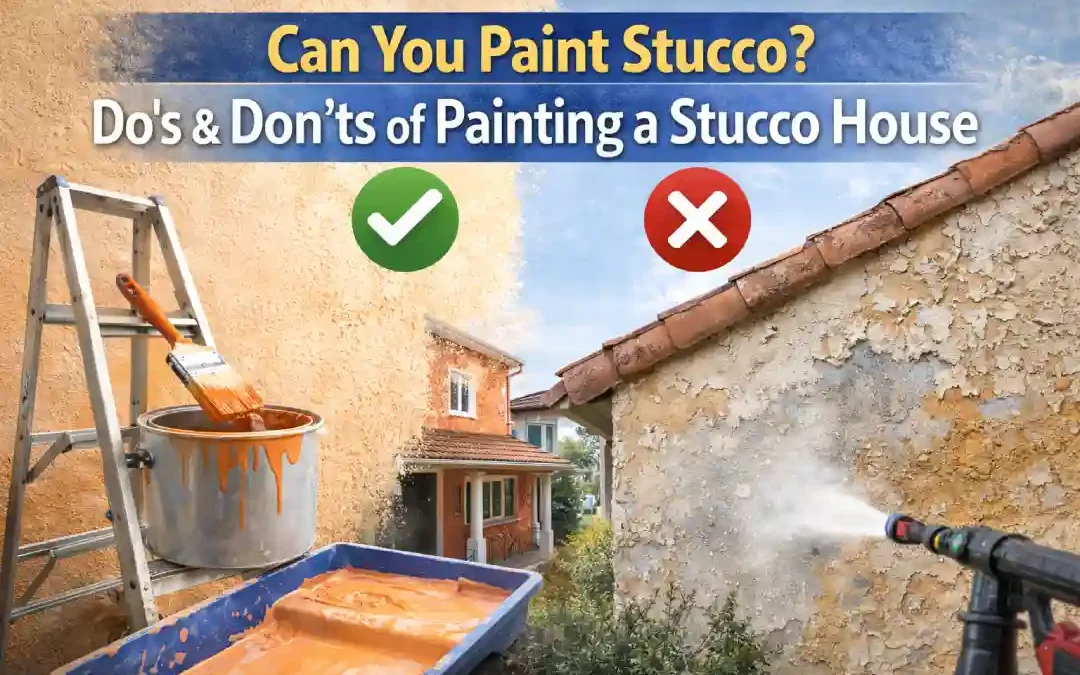
Painting a stucco house can dramatically improve its appearance and extend its lifespan, but improper techniques or paint choices can lead to peeling, cracking, and frequent maintenance. Many homeowners in Singapore struggle with the question: “Can you paint stucco safely?” or “Which paint works best for our humid climate?”. This guide provides actionable insights, detailing the do’s and don’ts of painting stucco, helping you make informed choices that enhance your home’s aesthetics while protecting your investment.
Understanding Stucco and Its Importance in Singapore Homes
Stucco is a popular exterior finish that combines cement, lime, and sand to create a textured, durable surface. Its popularity in Singapore comes from its ability to withstand tropical rains, heat, and humidity while providing a clean and modern look. However, stucco is a porous material that requires careful painting and maintenance. Applying the wrong paint or skipping crucial preparation steps can result in water damage, mould growth, and cracks that shorten the lifespan of the finish. For homeowners seeking long-lasting results, understanding the material and proper painting techniques is essential.
What is Stucco and Why Does It Require Special Care
Stucco is a cement-based coating applied over exterior walls, providing both texture and protection. Its composition allows the material to breathe, letting moisture escape from the walls. This characteristic prevents water buildup but also means that stucco must be painted with products that are compatible with its porous nature to avoid peeling or bubbling.
Common Uses in Singapore Homes
Stucco is widely used on landed houses, condominiums, and heritage properties in Singapore. Its textured finish enhances curb appeal and allows homeowners to choose a wide range of colours. In addition, stucco is resilient to minor weather changes, making it ideal for the tropical climate when properly maintained and painted.
Unique Challenges of Painting Stucco
Painting stucco requires more attention than smooth surfaces. The rough texture can make paint adhesion tricky, while cracks or chips in the surface will become noticeable if not repaired. Singapore’s high humidity and frequent rainfall further increase the risk of peeling and uneven finishes. For these reasons, homeowners should follow specific dos and don’ts to ensure a durable, visually appealing result.
Do’s of Painting Stucco
Do Inspect and Repair Stucco Surfaces First
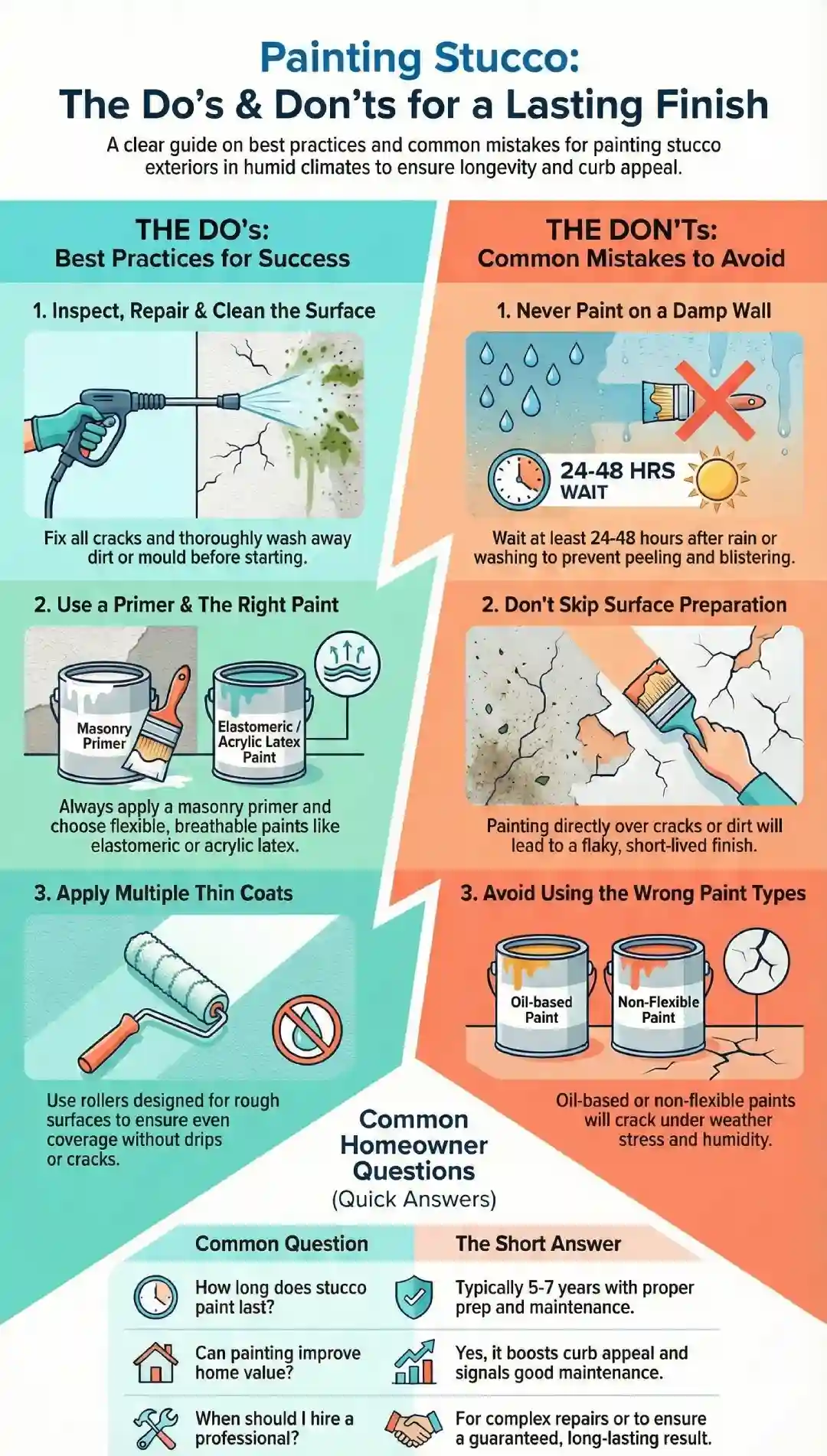
Before painting, it’s essential to thoroughly inspect stucco for cracks, chips, and damage. Even small fissures can worsen over time if painted over without repair. For Singapore homes, which face high humidity and frequent rainfall, repairing damaged areas prevents water infiltration that can lead to mould growth or peeling paint. Use suitable stucco patching compounds, allow sufficient curing time, and ensure the surface is completely dry before proceeding. Proper inspection and repair extend the lifespan of your paint job and maintain a smooth, professional finish.
Do Clean and Remove Mold or Mildew
Cleaning stucco surfaces is critical to ensure paint adheres properly. Stucco’s textured nature traps dirt, dust, and moisture, making it prone to mould in Singapore’s tropical climate. Pressure washing or scrubbing with a mild detergent removes surface contaminants. After cleaning, allow the stucco to dry completely, as painting over damp surfaces can cause blistering, bubbling, or peeling. Regular cleaning before painting also helps identify areas needing repair, ensuring a uniform, long-lasting finish.
Do Choose the Right Paint for Stucco
Selecting the correct paint is crucial for stucco. Elastomeric paint, acrylic latex, and high-quality masonry paints are recommended for their flexibility, breathability, and resistance to cracking. In humid Singapore conditions, low-VOC paints are preferred for healthier indoor and outdoor environments. Avoid oil-based or non-elastomeric paints, as they do not expand with the surface and are more likely to peel under humidity. Choosing the right paint ensures durability, colour retention, and minimal maintenance.
Do Prime Before Painting
Priming stucco is often overlooked but is a key step for long-lasting results. Primers improve adhesion, seal porous surfaces, and create a uniform base that enhances the paint’s appearance. For stucco, use primers before painting for masonry or textured surfaces. Priming also helps prevent patchy finishes and increases the paint’s resistance to moisture, which is especially important in Singapore’s tropical environment, where rainfall and humidity can affect exterior walls.
Do Apply Paint Correctly
Applying paint properly on stucco is essential due to its textured and uneven surface. Use brushes or rollers suited for rough surfaces to ensure full coverage in grooves and crevices. Apply multiple thin coats rather than a single thick coat, which can lead to cracking or peeling. Pay attention to edges, joints, and corners where water can accumulate. Correct application techniques help maintain a consistent finish, improve colour vibrancy, and maximize durability.
Don’ts: Mistakes to Avoid When Painting Stucco
Painting Over Wet or Damp Stucco
Painting over damp or recently cleaned stucco is a common mistake that can lead to blistering, peeling, and poor adhesion. In Singapore’s tropical climate, where humidity is high and rain is frequent, it’s crucial to ensure stucco is completely dry before painting. Waiting 24–48 hours after washing or rain can prevent moisture-related issues. Failing to follow this step reduces the durability of the paint and can require costly touch-ups sooner than expected.
Skipping Surface Preparation
Skipping surface preparation is one of the biggest errors in stucco painting. Dirt, dust, and loose particles prevent paint from bonding correctly, leading to flaking and uneven finishes. Proper cleaning, repairing cracks, and sanding rough areas create a stable base that ensures the paint adheres well. For homeowners in Singapore, where stucco is exposed to tropical weather, thorough preparation is essential to maintain both aesthetics and longevity.
Ignoring Cracks or Damage
Painting over cracks, chips, or holes in stucco compromises the integrity of the paint and the wall. Cracks will continue to expand under weather stress, causing paint to peel and stucco to deteriorate. Before painting, fill gaps with appropriate patching compounds and allow them to cure fully. Ignoring this step not only reduces the lifespan of the paint but also increases maintenance costs over time.
Using the Wrong Paint Types
Not all paints are suitable for stucco. Oil-based paints or non-elastomeric paints can crack and peel under Singapore’s humid conditions. Elastomeric, acrylic latex, or masonry paints are designed to expand with stucco and resist water penetration. Choosing inappropriate paint reduces durability, leads to more frequent repainting, and can negatively affect the exterior’s appearance.
Applying Poor Painting Techniques
Applying too thick a coat, using the wrong tools, or neglecting corners and grooves can all result in an uneven, short-lived finish. Stucco’s textured surface requires brushes or rollers designed for rough surfaces. Applying multiple thin coats ensures even coverage, better adhesion, and prevents cracking. Incorrect technique is a common reason homeowners need early touch-ups or repaints.
How Climate Affects Painting Stucco in Singapore
Singapore’s tropical climate significantly influences the success of painting stucco exteriors. High humidity and frequent rainfall can prolong drying times and increase the likelihood of mould or mildew forming on the walls. Painting during rainy periods or on extremely humid days can compromise adhesion, leading to peeling or blistering. Planning your project during the optimal periods for exterior painting in Singapore, such as the drier months from February to September, ensures the stucco is fully dry for better paint adhesion.
Homeowners should also consider the time of day; mornings and late afternoons, when temperatures are moderate and humidity slightly lower, are generally ideal. Planning painting projects around seasonal dry periods ensures better coverage, durability, and a uniform finish, especially when using paints suited for humid conditions like elastomeric or acrylic latex options.
Maintenance and Repainting Frequency for Stucco Exteriors
Regular maintenance is key to extending the life of stucco paint in Singapore. Signs that repainting is needed include peeling, fading, water stains, or mould growth. Depending on the type of paint used, repainting is generally recommended every 5–7 years. To maximize paint lifespan, homeowners should conduct periodic cleaning, promptly touch up damaged areas, and manage moisture levels around walls by repairing leaks or improving drainage. Routine inspections allow you to address minor issues before they escalate, ensuring the stucco remains attractive, functional, and weather-resistant.
Frequently Asked Questions
Can you paint stucco directly without primer?
Painting stucco without a primer is not recommended. Primer seals the porous surface, ensures adhesion, and prevents uneven finishes.
Which paint is best for stucco exteriors in humid climates?
Elastomeric paint or acrylic latex paint is ideal in Singapore. These paints expand with the surface and resist cracking, moisture, and mould.
How do I fix cracks before painting stucco?
Cracks should be cleaned, filled with a suitable patching compound, and allowed to cure fully. Smooth out rough edges to ensure the paint adheres evenly.
Can painting stucco improve home resale value?
Yes. A well-painted stucco exterior enhances curb appeal and signals proper maintenance, which can positively influence potential buyers.
How long does stucco paint last in Singapore?
With proper surface preparation, paint choice, and maintenance, stucco paint typically lasts 5–7 years, even in humid tropical conditions.
Professional Services: When to Hire Experts
Painting stucco requires experience to manage its textured surfaces, repairs, and priming requirements. Hiring professional painters ensures correct preparation, appropriate paint selection, and precise application techniques that are difficult to replicate in DIY projects. Professionals can identify and repair hidden cracks, prevent common mistakes, and optimize coverage for long-lasting results.
For Singapore homeowners, engaging experts reduces the risk of peeling, mould, or uneven finishes while saving time and effort. Painting Services Singapore offer comprehensive stucco painting services tailored to tropical conditions, delivering durability and aesthetic appeal.